Belgium

Anticipating Customer Complaints 

By Tim Oakes, Senior Manager, Service, Analysis & Reporting, Royal Bank of Scotland


Talking is easy. It’s listening that banks don’t always do well.


For many banks, social media represents an innovative and cost-effective channel for ‘pushing’ out marketing messages and promoting their brands. A tell-tale sign is banks whose social media strategy is being led by Sales and Marketing, rather than Customer Service or Experience professionals.

The Social Banker Series


At RBS, we see social media as much more than a simple marketing tool. It is also an unprecedented opportunity to listen to our customers, improve our service and rebuild trust.


Getting the whole picture


Take complaint handling for example. Anyone that has worked in customer service knows that only a fraction of customer complaints travel through official channels. Customers are, overall, much more likely to tell their friends about substandard service than their bank manager or corporate help line. But with the advent of social media, suddenly banks are able to listen in on their customers’ public conversations, identify complaints and – where appropriate – make contact in an effort to resolve the issue.


And that is where the revolution starts: instead of waiting for customers to become irate enough to lodge a complaint, banks now have the opportunity to actively seek out dissatisfied customers and resolve their issues before they turn into full-blown complaints.


The death of customer complaints?


But this is only the first step in transforming the customer service delivery model for banks. The next evolution comes from leveraging the information from social media to anticipate and mitigate future complaints.


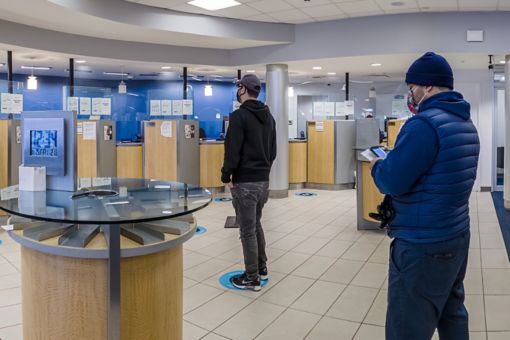
Say, for example, that over the course of a few weeks we were to see multiple tweets from customers saying they are standing in line at one of our branches, we could quickly move to flag the potential problem to the branch manager and re-examine the resourcing at that branch to speed up customer service and enhance overall satisfaction.


Of course, talking isn’t always bad either; social media also offers customer service representatives a fast and effective way to alert customers to potential issues such as service disruptions. And by getting ahead of the issue, banks will not only stem the flood of calls to the call centre, but can also rebuild much needed trust with their customers.


In other words, social media provides an incredibly rich channel that allows banks to anticipate customer service problems before they arise rather than just reacting to them after they happen.


Crowd-sourcing service improvements


At RBS, we are adopting the same principles to solicit service improvement suggestions from our customers. Through a recently developed website, we are effectively converting our customers into advisors by providing a more interactive forum where they can not only submit suggestions but also see how their ideas are being progressed and incorporated into our business strategy. The network can also be used to test ideas and essentially ‘crowd-source’ new service models and offerings.


At the end of the day, social media will not only enable customer service managers to deal more efficiently and effectively with clients, it will also allow customers to play a significant role in the way the bank develops services. And given that customer service is at the heart of RBS’s value proposition, I suspect it is fair to say that our social media journey is just beginning.


The views and opinions expressed herein are those of the authors and do not necessarily represent the views and opinions of KPMG International or any KPMG member firm.